Introduction
What if the walls holding your home together are quietly falling apart — and you'd never even notice until it's too late?
That's the unsettling reality for thousands of Australian homeowners every year. Brickwork repointing is one of those maintenance jobs that flies completely under the radar — right up until you're staring at a cracked wall, a damp patch on your ceiling, or a repair bill you weren't expecting.
Here's the thing: brickwork doesn't fail all at once. It happens slowly, millimetre by millimetre, as the mortar joints between your bricks crack, crumble, and wash away. By the time you can see the damage clearly, it's often already gone further than you'd like.
This guide is for the everyday Aussie homeowner — the person who bought a solid brick home in the suburbs and wants to keep it standing strong for decades. We'll walk you through what brickwork repointing actually is, how to spot the early warning signs, what it costs, and how to find a tradie you can actually trust.
Let's get into it.
What Is Brickwork Repointing — and Why Do People Keep Confusing It With Tuckpointing?
If you've ever Googled "repointing" and ended up more confused than when you started, you're not alone.
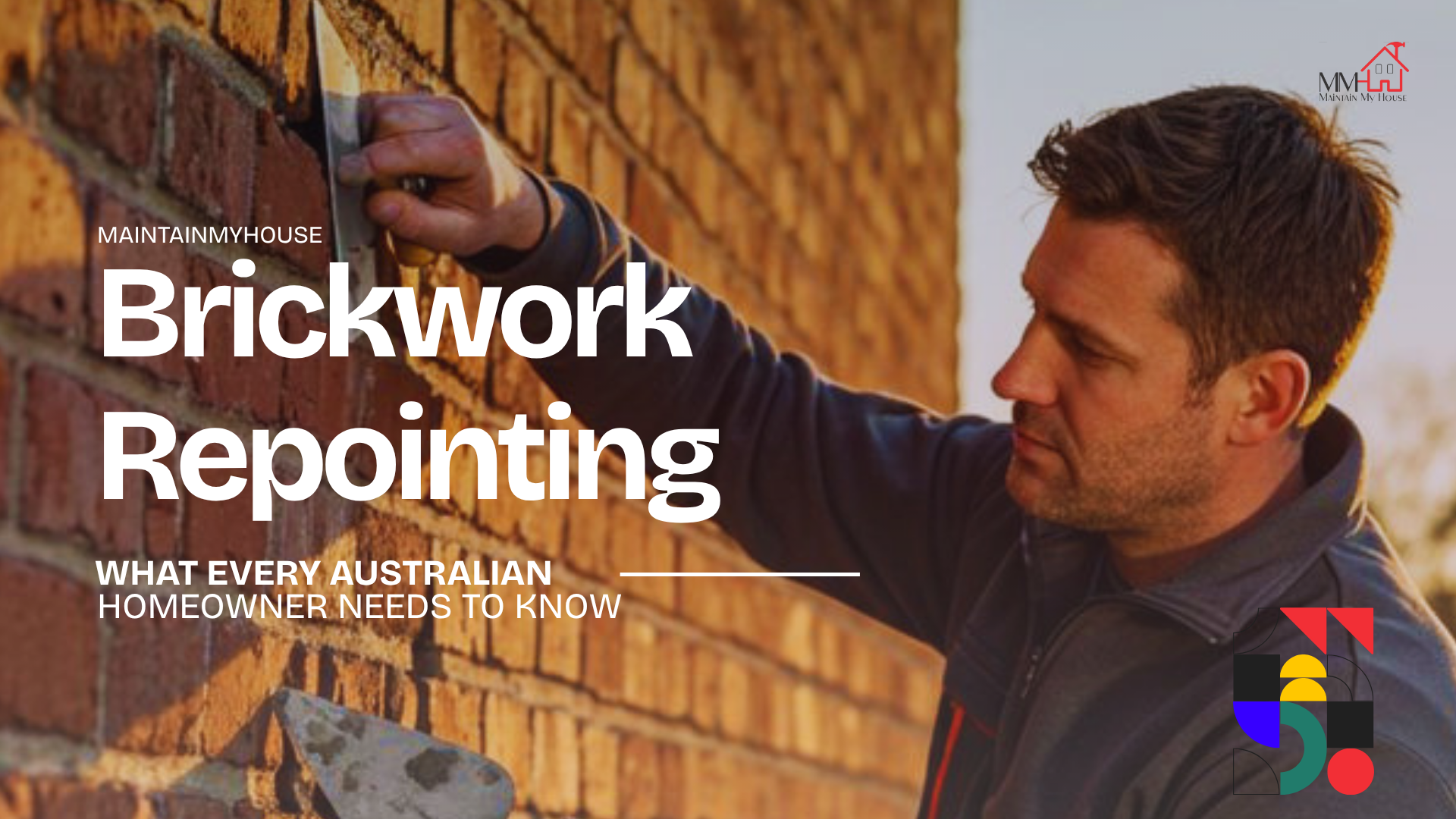
Brickwork repointing is the process of removing old, deteriorated mortar from the joints between bricks and replacing it with fresh mortar. Think of it like re-grouting your bathroom tiles — except the stakes are a lot higher, and the job is a lot bigger.
The mortar between your bricks isn't decorative. It's structural. It keeps water out, holds everything in alignment, and distributes the load of the wall evenly across every brick. When that mortar breaks down, the whole system is compromised.
Repointing vs Tuckpointing — What's the Real Difference?
You'll hear both terms thrown around in Australia, often interchangeably. But they're not quite the same thing.
- Repointing refers to the removal and full replacement of deteriorated mortar joints. It's a practical, structural repair.
- Tuckpointing is a finishing technique where two contrasting mortar colours are used — one to fill the joint flush, and a thin line of a contrasting colour on top to create the illusion of very fine, precise joints. It's more of an aesthetic finish, often used on heritage homes.
In practice, most Aussie tradies use "tuckpointing" and "repointing" to mean the same job — replacing old mortar. Don't stress too much about the terminology. Just focus on getting the work done right.
Here's Why Mortar Deteriorates Over Time
Mortar is made from sand, cement, and water. Over time, it's subjected to:
- UV exposure — Australian summers are brutal, and constant UV breaks down the mortar binder
- Thermal expansion and contraction — bricks and mortar expand and contract at different rates, which creates micro-cracks
- Rain and moisture — water works its way into tiny cracks, freezes in colder climates (hello, Melbourne winters), and expands
- Age — most mortar has a natural lifespan of 20 to 30 years, after which it simply needs replacing
Most Australian brick homes built between the 1950s and 1990s are now well within the window where repointing becomes necessary. If your home is in that era, it's worth having a look.
Warning Signs You Can't Ignore: Is Your Brickwork Screaming for Help?
Here's a hard truth: most homeowners only call a tradie after the damage has already spread. Catching the signs early can save you thousands.
Walk around the outside of your home on a sunny afternoon. Look at the mortar joints closely — those thin lines between each brick. Here's what you're looking for.
Are Your Mortar Joints Crumbling, Recessed, or Missing Entirely?
This is the most obvious sign, and it's more common than you think. Run your finger along the mortar joints on an older section of your wall. If the mortar crumbles easily, feels soft, or if you can see gaps where mortar has completely fallen away, repointing is overdue.
Mortar that has receded more than 5–6mm below the face of the brick is no longer doing its job properly. Water can pool in those recesses and work its way deep into the wall cavity.
Brick Wall Cracking — When Is It a Sign of Something Serious?
Cracks in brickwork make every homeowner nervous, and for good reason. But not all cracks are equal.
- Hairline cracks in the mortar joints alone are usually fine to monitor. They're common in older homes.
- Step cracks — where the crack runs in a staircase pattern along the mortar joints — can indicate foundation movement or significant mortar deterioration. These need professional assessment.
- Horizontal cracks running through the bricks themselves (not just the mortar) are a structural red flag. Stop reading and call someone today.
A Melbourne homeowner we spoke to noticed a step crack running along the rear wall of their 1970s double-brick home. They'd dismissed it for two years. When a repointing specialist finally inspected it, they found the mortar had failed across nearly 40% of the wall — water had been entering the cavity and quietly rotting the timber frame behind it.
The fix? About $3,800 in repointing and another $1,200 in timber repairs. Had they acted two years earlier, it would've been a $1,500 job.
Damp Patches and Water Stains — Your Walls Are Telling You Something
Damp patches appearing on your interior walls — especially after heavy rain — are one of the clearest signs that your mortar joints have failed. Water is finding a path through the wall, and that path almost always runs through degraded mortar.
In coastal areas like Sydney's northern beaches or Brisbane's bayside suburbs, the combination of salt air and humidity accelerates mortar deterioration dramatically. Homes in these areas often need repointing 5–10 years earlier than comparable homes inland.
White Powder on Your Brickwork? That's Efflorescence — and It Matters
That chalky white staining you sometimes see on brick walls isn't just ugly. It's a symptom.
Efflorescence happens when water moves through brickwork, dissolves salts inside the masonry, and deposits them on the surface as it evaporates. It's a reliable indicator that moisture is penetrating your wall — which often traces back to failed mortar joints.
Left unaddressed, the ongoing moisture movement that causes efflorescence will continue to degrade your brickwork from the inside out.
Why Brickwork Repointing Is Non-Negotiable for Australian Homes
Australia is not a gentle place for buildings. The climate — in all its extremes — is genuinely tough on masonry, and that makes repointing more than just a cosmetic fix.
Your Brickwork vs Australia's Weather — and Why the Weather Usually Wins
Consider what Australian brickwork has to endure:
- In Queensland, the intense summer heat followed by monsoonal rains creates huge thermal stress on mortar joints
- In Victoria and Tasmania, freeze-thaw cycles in winter can be devastating — water enters cracks, freezes, expands, and widens those cracks significantly
- In South Australia and Western Australia, dry summer winds carry dust and abrasives that erode mortar surfaces over time
- In coastal areas everywhere, salt-laden air accelerates the chemical breakdown of mortar binders
Weatherproofing brick walls is one of the primary purposes of well-maintained mortar joints. When the mortar fails, your wall loses its primary defence against moisture intrusion — and that's when the expensive problems begin.
Protecting Your Home's Structure — and Its Value
Beyond weatherproofing, consider the structural implications. Brick walls rely on mortar to distribute load evenly. Failed mortar creates stress concentrations in individual bricks, which leads to cracking and, in severe cases, structural instability.
From a property value perspective, a home with visibly deteriorated brickwork — or worse, with damp problems traced back to failed mortar — will face tough questions during a building inspection. In Australia's competitive property market, a good building inspector will flag repointing issues. Buyers will use it as leverage to negotiate the price down.
Conversely, freshly repointed brickwork adds to kerb appeal and demonstrates that the home has been well maintained — something any buyer or property valuer will notice.
The Brickwork Repointing Process: What Actually Happens on the Day?
A lot of homeowners approve the quote and then have no idea what's about to happen to their walls. Here's a plain-English breakdown of how the process works.
Step 1 — Inspection and Removing the Damaged Mortar
Before a single trowel of new mortar goes in, the old stuff has to come out. This is done using an angle grinder fitted with a diamond blade, or — for more delicate work on heritage homes — a hammer and cold chisel.
The tradie will cut or chisel out the old mortar to a depth of around 15–25mm. This gives the new mortar enough depth to bond properly. Shallow cuts mean the repair won't last.
This step is noisy and dusty. If you're home during the work, expect that.
Step 2 — Choosing the Right Mortar Mix for Your Bricks
This is where a lot of DIY jobs go wrong, and where an experienced tradie earns their fee.
Not all mortar is the same. The mix needs to be matched to the original brickwork — particularly in terms of strength and flexibility. Using a mortar that's too hard (high cement content) on soft heritage bricks can cause the bricks themselves to crack, because the mortar won't flex and the brick has nowhere to go.
For most Australian homes:
- Older homes (pre-1970s) often need a softer lime mortar mix
- Modern brick homes typically use a standard sand-and-cement mix
- Heritage-listed properties may require specialist lime mortar to comply with heritage guidelines
If you're in doubt, ask the tradie what mix they're planning to use and why. A good one will explain it without hesitation.
Step 3 — Applying the New Repointing Mortar Joints
The joints are dampened slightly to prevent the new mortar from drying too fast, then the fresh mortar is packed in firmly using a pointing trowel. The tradie works in sections, applying and shaping the mortar to match the profile of the original joints.
This is skilled work. Repointing mortar joints unevenly — or with air pockets — creates weak spots that will fail prematurely.
Step 4 — Curing and Optional Sealing
Fresh mortar needs time to cure properly — typically 24 to 48 hours minimum before it gets wet. In hot weather, it may need to be kept slightly damp to prevent it from drying too fast and cracking.
Some tradies recommend applying a penetrating masonry sealer after the mortar has fully cured (usually after 28 days). This adds an extra layer of moisture protection — particularly worthwhile in coastal or high-rainfall areas.
Tuckpointing Cost Australia — What Should You Actually Budget?
Let's talk dollars. This is usually the first question homeowners ask — and understandably so.
Average Repointing Prices in Australia (2024–2025)
Costs vary depending on location, access, and the condition of the existing mortar. But here are realistic benchmarks:
| JOB TYPE | APPROXIMATE COST |
| Small repair / single wall section | $300 – $800 |
| Single-storey home (full repoint) | $2,500 – $6,000 |
| Double-storey home (full repoint) | $5,000 – $12,000+ |
| Per square metre (labour only) | $45 – $80/m² |
| Heritage or lime mortar work | 20–40% premium |
These are indicative ranges. Always get at least three quotes and make sure each one specifies the mortar mix, depth of cut, and what's included in the cleanup.
What Actually Drives the Cost Up?
Several factors can push a repointing quote higher:
- Height and access — scaffolding for a two-storey home adds significant cost
- Condition of existing mortar — heavily deteriorated mortar takes longer to remove
- Heritage requirements — specialist lime mortars and careful hand-chiselling cost more
- Location — tradies in Sydney and Melbourne generally charge more than those in regional areas
- Size of the area — obviously, a full house costs more than a feature wall or chimney
DIY Repointing vs Hiring a Professional — Is It Worth the Risk?
Yes, repointing kits are available at Bunnings. And yes, a motivated homeowner can tackle a small section of mortar repair themselves. But here's the honest assessment:
DIY is reasonable for:
- Small, easily accessible areas of mortar repair
- A single course of bricks at ground level
- Homeowners who are genuinely handy and willing to research the correct mortar mix
Hire a professional for:
- Anything above ground level
- Widespread or structural deterioration
- Heritage homes or properties with specific mortar requirements
- Any situation where water intrusion is already occurring
Using the wrong mortar mix — or not cutting deep enough — can mean your DIY repair fails within 2–3 years. At that point, you'll end up paying for a professional to remove your repair and start again. That's a costly lesson.
How Long Does Repointing Last? And How Do You Make It Last Longer?
Great question — and one that too few people ask before they write the cheque.
The Honest Answer on Lifespan
Quality professional repointing should last 20–30 years under normal conditions. The key variables are:
- Quality of the mortar mix and application
- Local climate and exposure
- Whether the underlying cause of deterioration (drainage, roof runoff, rising damp) was addressed
If your repointing starts showing significant deterioration within 5–10 years, something went wrong — either with the mix, the depth of the repair, or there's an ongoing moisture problem that wasn't fixed.
Smart Masonry Maintenance Tips to Protect Your Investment
Once the repointing is done, don't just forget about it. These habits will extend the life of your work significantly:
- Check your gutters and downpipes — overflowing gutters direct water straight down brick walls, accelerating mortar breakdown
- Inspect brickwork annually — a quick walk-around in spring takes 10 minutes and can catch new cracks early
- Keep soil and garden beds away from the wall base — soil contact traps moisture against brickwork
- Fix any roof or flashing issues — water running behind brickwork from failed flashing is a common and hidden cause of mortar failure
- Don't pressure-wash your brickwork — it strips mortar and removes the natural patina that protects the brick face
How to Find a Trustworthy Brick Restoration Specialist in Australia
Here's where a lot of homeowners get burned. Brickwork repointing doesn't require a specific licence in most Australian states — which means the quality of tradies varies enormously.
What to Look for Before You Book Anyone
- Evidence of experience — ask to see photos of completed repointing jobs, particularly on homes similar in age and style to yours
- Membership in a trade association — look for members of the Master Builders Association (MBA) or Housing Industry Association (HIA)
- Written quote with specifics — the quote should detail the mortar type, depth of cut, and warranty offered
- Insurance — public liability and workers' compensation are non-negotiable
- Local knowledge — a tradie who works regularly in your area will understand local brick types and climate conditions
Questions Worth Asking Before You Sign Anything
These questions separate the experienced operators from the cowboys:
- What mortar mix will you use, and why is it suited to my brickwork?
- How deep will you cut out the existing mortar?
- Do you carry public liability insurance? Can I see a copy?
- How long will the work take, and what's the cleanup process?
- What warranty do you offer on the repointing work?
A tradie who can't answer these clearly and confidently is not the right person for the job.
Red Flags That Should Send You Elsewhere
- Quote that seems unusually low (cheap mortar, shallow cuts, or rushed work)
- No written quote — only a verbal price
- Pressure to pay a large deposit before work begins
- No interest in inspecting the full extent of the damage before quoting
- Can't explain the mortar mix they plan to use
Professional brick restoration isn't complicated, but it does require care and experience. Take your time finding the right person.
Frequently Asked Questions About Brickwork Repointing
Can I Repoint My Own Brickwork, or Is That a Bad Idea?
For small, accessible repairs? Yes, with the right materials and some patience, DIY repointing is doable. The key is using the correct mortar mix and cutting the old mortar out to a proper depth (at least 15mm). Where most DIYers go wrong is using an off-the-shelf sand-and-cement mix that's too hard for the age of their bricks.
For anything structural, widespread, or above ground level — hire a professional. The risk of getting it wrong outweighs the savings.
Will Repointing Fix the Cracks in My Brickwork?
Repointing will repair and stabilise mortar joint cracks, but it won't fix cracks caused by structural movement or foundation issues. If you have step cracks running through multiple courses of brickwork, or if cracks keep reappearing after repair, the underlying cause — whether that's tree roots, soil movement, or a foundation problem — needs to be identified and addressed separately.
If you're unsure, get a structural engineer to look at it before you spend money on repointing.
What Type of Mortar Should Be Used for Repointing in Australia?
For most standard brick homes built from the 1970s onwards, a Type S mortar (1 part cement : ½ part lime : 4.5 parts sand) is a solid general-purpose choice. For older homes, particularly pre-1960s, a higher lime content is usually necessary to match the flexibility of the original mortar. Using a hard, modern mortar on soft, old bricks can cause the bricks themselves to crack.
Always match the mortar strength to the brick strength — not the other way around.
Conclusion — Don't Wait for the Walls to Tell You It's Too Late
Brickwork repointing isn't glamorous. It doesn't come with the excitement of a kitchen reno or a fresh coat of paint. But it's one of the most important maintenance jobs you can do as an Australian homeowner — and one of the best investments you can make in your property's long-term health.
The signs of mortar deterioration are easy to miss until they're impossible to ignore. And by then, you're not just paying for repointing — you're paying for water damage, timber repairs, and the headache that comes with it.
Don't wait for the cracks to widen or the damp patches to spread.
Get a professional assessment done this season. A good brick restoration specialist can tell you in 30 minutes exactly what needs doing and give you a clear, honest quote. Whether it's a minor touch-up or a full repointing of the mortar joints across the whole house, the earlier you act, the less it costs. Hire one for your home by searching from our directory by clicking here.
Ready to protect your home? Reach out to a licensed brickwork repointing specialist from our website and ask for a free inspection and quote. Your bricks have been holding things together for decades — make sure the mortar can keep doing its job.